Kitesurf & Watersports Model: Credible Water Action – from Kite to Jet Board
From kite to jet board: what a watersports model has to master, what makes water shoots risky – and what to watch for when filming kitesurfing with a drone.
Written by
Tobi Deckert
Reading Time
7 minutes


What I ride – and at what level
Kitesurfing (pro level): big air, jumps, kite loops, mega loops, unhooked basics (freestyle), wave kiting, foiling basics.
Wing foiling, windsurfing: solid basics (tacking, gybing, planing).
Wakeboarding: with obstacles – kickers, backflips, handle pass, rails/sliders – confident, cable park or behind the boat.
Wakesurfing, mono-ski, water ski: a decent level.
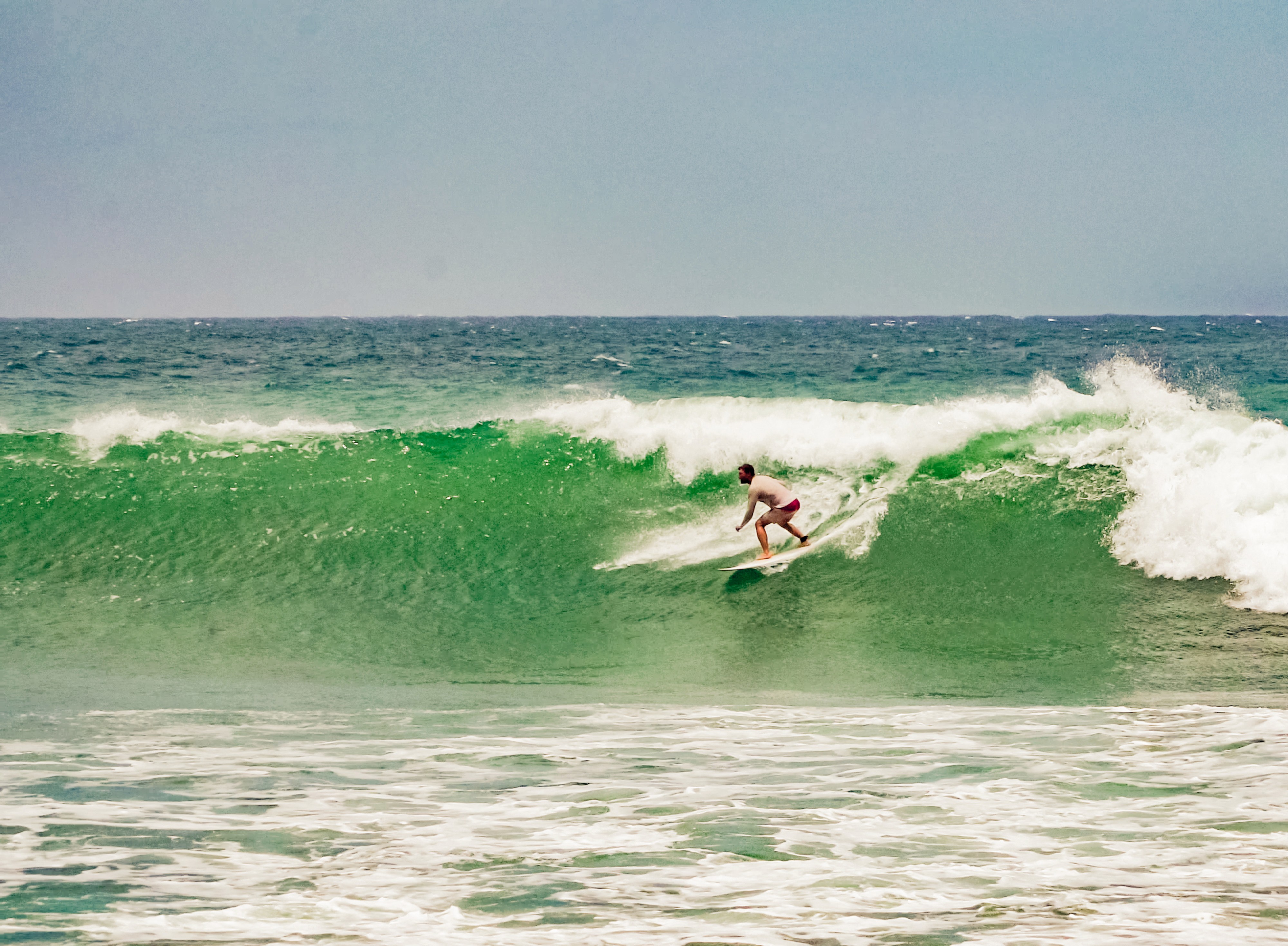
Surfing: no beginner, paddling into and riding ~2 m waves; river surfing at a stable level.
E-foil, jet ski, jet board, SUP (including standing in whitewater), kayak, skimboarding, snowkiting.
That this isn’t marketing shows in the results: wins at the International Snowkite Open and Snowkitemasters, top-10 finishes and wins at Red Bull Ragnarok. In 2012, with team partner Kati Piironen, I won the Chiemsee challenge “Freaky Talentfrees” – a six-week boardsport world trip across five destinations (kiting Trinidad & Tobago, windsurfing Naxos, wave riding South Australia, snowboarding Zürs, freeski Ischgl).
The common thread: the biomechanics of many board moves are alike. A backflip feels similar on skis and on the bike – and still similar with no gear at all. The gear grows on you. Hence my tip to productions: for a new device, give the model the gear to train on beforehand.
What has run on camera
Yodobashi – jet board. Not everyone has ever ridden such a board; casting was hard for the team. With me it clicked in the casting exactly as the shoot needed – thanks to that general board feel. → Details in the Yodobashi jet board case.
Sunlight (camper). A couple drives to the coast, the camper as the ideal vehicle for a kitesurf adventure – the kite action came out slimmer than planned because there was no wind. An honest example of how much watersports depend on the element.
Bogner (Eibsee). We stood on SUPs; my backflip off the rope swing made the final cut. (My watersports history also includes a Kite Magazine cover shot.)
Norway – snowkite/speedriding expedition. A self-produced film (shot, edited, performed), including sponsor material. (Flysurfer is indirectly part of Skywalk – again the proximity to product development.)

What makes water shoots risky – and how to plan them
Water is one of the most dangerous forces of nature – never forget that. So:
Basic swim fitness – not just for the athlete, but the whole team (camera often stands knee- to hip-deep in the water).
Rescue chain: rescue staff, a safety briefing, ideally a boat nearby – everyone knows what to do in an emergency.
Seasickness in the camera team (underrated): a stationary boat rocks more in swell than a moving one; looking through the lens, people get queasy fast. Medication beforehand helps.
Wind – offshore vs. onshore: onshore (pushing you to shore) is less dangerous but makes bigger waves. Offshore (pushing you out to sea) is especially dangerous – on gear failure you get carried out. The upside of offshore: glassy water, perfect take-offs, good to film from land – but then keep a safety boat/jet ski ready.
Rule of thumb: keep height, keep distance from jetties/rocks; know the currents and tides (local knowledge).
Location & law: cable parks for wakeboard/water ski, a boat licence where required.
Kite safety: modern kites have many safety systems (the big switch came in 2007, including quick releases). You release via the chicken loop, the kite depowers and flags out. If something tangles, you get a death loop – the kite spins endlessly and pulls like a tractor; then you need a fast, well-powered boat. In the worst case you separate from the gear entirely.
Aerial/drone shots when kitesurfing
A distinct, often underrated angle. Kiting needs wind – real action from about 20–25 knots (~50–60 km/h). Worth knowing: consumer drones (e.g. a Mavic) only do ~60–70 km/h in sport mode – flying into the wind, the drone is near its limit.
Watch the lines: the kite hangs on four lines on the leeward side. At a spot there are usually several kites in the air; flying backwards, you can’t see what’s behind you.
Worst case: if the drone hits the kite, it ranges from a tear in the canopy to a severed bladder at the front tube – then the kite drops into the water, no relaunch, self-rescue is hard, and the drone is gone in salt water anyway. The lines (Dyneema) are very cut-resistant, but the rotor blades break every time.
Safety distance: for normal kite runs at least 25 m (standard line length). Coordinate on the beach with the camera team – you often want the kite close-up too.
FPV: more power against the wind, but it has to keep orbiting and can’t look back – keep the airspace clear.
Timing: set a buoy as a take-off marker; observe first, then fly – every jump is different (a drone at 40 m plus a high jump over 10 m gets tight; gusts make jumps unexpectedly higher). Best to keep the drone upwind and film from behind.
Knowing this from both sides helps: I work with a Mavic drone, action cams and Insta360 myself. More real material at @tobi_deckert_sportmodel.
Planning a campaign with credible water action? Send a booking request.
FAQ
What makes a good watersports model?
Versatility and a real feel for the board: someone who masters kite, wake, surf, SUP and foil gets up to camera level fast even on new or unfamiliar gear – delivering credible action instead of staged poses.
What makes water shoots especially risky?
The water itself, plus wind (especially offshore), currents and tides. Safety means: swim fitness across the whole team, a rescue chain, a safety boat, and – when kiting – mastering the safety systems (quick release, chicken loop).
What do you watch for when filming kitesurfing with a drone?
Wind speed vs. drone speed, the four kite lines, other kites in the airspace, and a safety distance (at least 25 m). A collision can destroy both kite and drone.
Facts & Skills
Disciplines | Kitesurfing (pro) · wake · wing/windsurf · surf/river surf · SUP · e-foil · jet ski/board · snowkite |
Competition | International Snowkite Open winner · Snowkitemasters · top-10 Red Bull Ragnarok · Chiemsee world trip 2012 |
Role | Commercial & Sport Model · watersports performer · in front of AND behind the camera |
References | Yodobashi (jet board) · Sunlight · Bogner (Eibsee) · Norway self-production |
Base | Alpine lakes · sea (int.) |
Read next: Chiemsee 2012: the World Trip · Planning Outdoor Shoots: Permits
More posts