
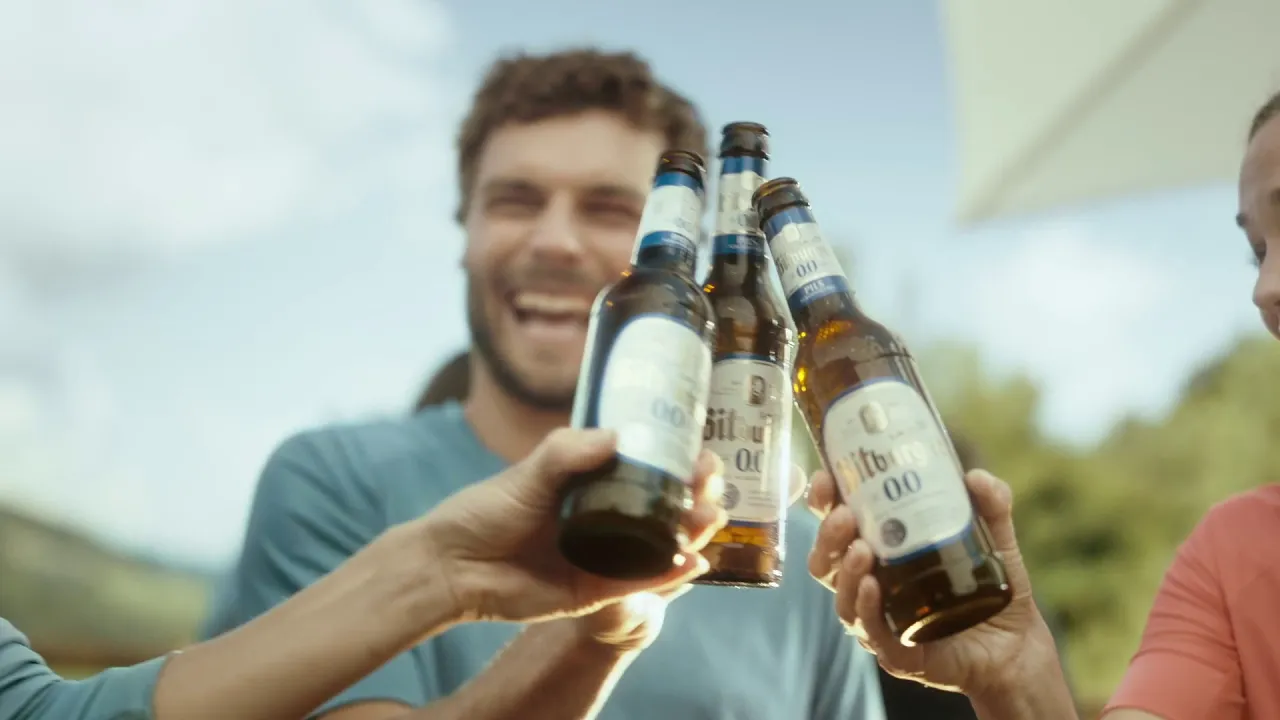
Bitburger 0.0% — One Face Instead of Three Doubles
Behind the scenes of the Bitburger 0.0% cinema spot: mountain bike action in the Eifel hills, a hero shot that took hours – and why one sport model saved three stunt doubles.
Written by
Tobi Deckert
Reading Time
5 minutes
The risk matrix
Severity of outcome →
| Insignificant 1 | Minor 2 | Significant 3 | Major 4 | Severe 5 | |
|---|---|---|---|---|---|
| Almost certain 5 | Medium 5 | High 10 | Very high 15 | Extreme 20 | Extreme 25 |
| Likely 4 | Medium 4 | Medium 8 | High 12 | Very high 16 | Extreme 20 |
| Possible 3 | Low 3 | Medium 6 | Medium 9 | High 12 | Very high 15 |
| Unlikely 2 | Very low 2 | Low 4 | Medium 6 | Medium 8 | High 10 |
| Rare 1 | Very low 1 | Very low 2 | Low 3 | Medium 4 | Medium 5 |
↑ Probability
Green · routinebruisesski carving · wingfoiling · cycling
Yellow · minorgrazes, small injuriesspeedriding in good wind
Orange · seriousbigger injuries, fractureskite action (condition-dependent)
Red · not approvedsevere, irreversible (e.g. broken neck)big cliff drop with too little snow · flying in föhn wind · kitesurf in wrong current / reefs
The same activity moves through the zones depending on conditions — weather, surface, light and daily form shift the rating.
The project
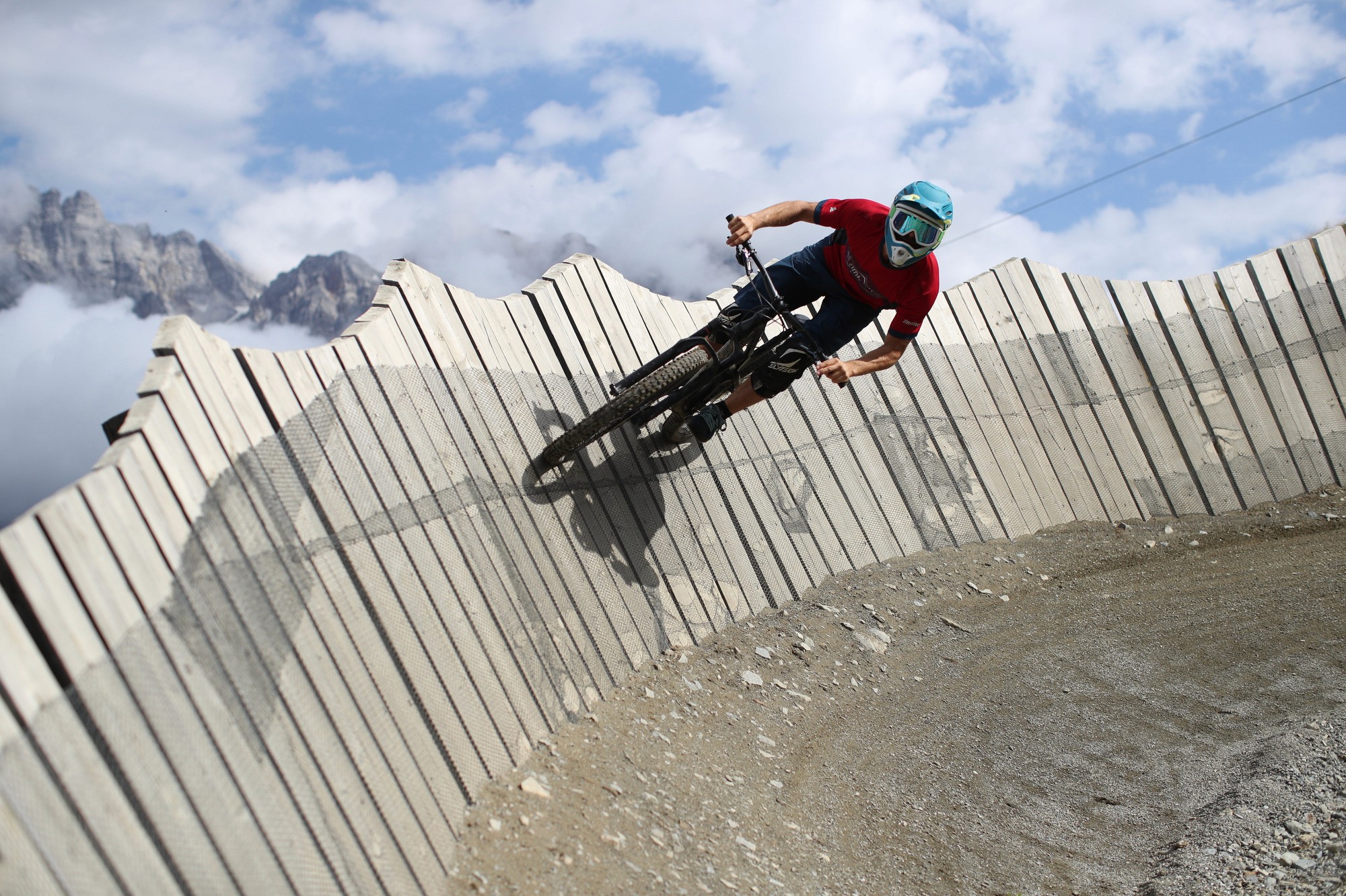
We shot right by the hop fields in Bitburg, with the mountain bike scene in the Eifel hills nearby – one and a half shooting days plus a recce day to scout and prep the trail. The product was a new, fully alcohol-free edition, positioned as the beer for athletes. The scene tells exactly that story: I'm out on the mountain bike with two other riders, then we head to the beer garden and toast with a Bitburger 0.0%.
The film was produced by BAKERY FILMS Filmproduktion GmbH and directed by Florian Meimberg; the booking came through Claudia Rummler (Lachfalten). It was a classic, large-scale commercial shoot with a full film crew: the beer garden scene alone was filled with around 30 extras, and the whole beer garden was built for it.
One face instead of three doubles
The thing that set this job apart: I rode the action myself. A conventionally cast production would have needed three stunt doubles for the three riding roles – riders who handle the athletic part for the camera while the models only deliver the close-ups. Here, that fell away. I was sport performer and model in one person, and because the action was manageable and the trail was routine for me, I also took on part of the stunt coordination.
For the client, that means fewer people on set, less shooting time, and one consistent face from the action shot to the close-up – with no visible break between “double on the bike” and “model with the glass.” That's not a marketing claim; it's the reason this shoot ran so smoothly.
Mountain biking at camera level
In the finished spot you mostly see the fast, flowing descents. What you don't see: in between there were technical downhill sections over rocks that had to be ridden slowly and under control. Those are exactly the spots that separate “can ride a bike” from “can ride a bike on camera” – repeatable, on cue, take after take. Because we could look at and prep the trail beforehand, the riding itself wasn't the problem. It stayed demanding all the same: not every frame we rode made it into the final spot.
The hero shot: why a sip takes hours
The most involved moment wasn't the descent – it was the toast. For the hero shot, the drinking itself, every detail has to land: the fingers on the glass, the movement of the sip, the way the lip meets the bottle, all in sync with the light and the background. Getting it right took several hours, and I must have gone through several litres that day – real beer, because only real drinking looks authentic on the big screen. The fact that this edition was alcohol-free came in very handy.
Light, drone, timing
Two things made the shoot technically interesting. First, the light: the sun needed to be out in the background, but it couldn't throw hard shadows onto our faces – so a huge diffuser was set up to soften the sunlight. Second, the drone: the action run had to be timed precisely to the flight of the large camera drone, which had to fly right through the trees in the forest. Every bit of timing counts there.
The finished spot: watch on YouTube.
What it comes down to
This job stands for what I offer as a model: the combination of action, sport, performance and commercial model – all in one person. A production gets the athletic move and the on-brand face from a single source, with no second team and no double.
If you're planning a campaign where sport, movement and brand come together: send a booking request.
FAQ
Why a sport model instead of a model plus a stunt double?
Because one performer delivers both: the athletic move and the on-brand face. It saves a second team and the extra fee, avoids any visible break between double and model, and cuts shooting time. On the Bitburger spot, a conventional cast would have needed three stunt doubles.
Do you really have to drink for real in a beer commercial?
Yes. Only real drinking looks authentic on screen – the grip on the glass, the lip on the bottle, the swallow. That's why a hero shot takes hours and many takes. The alcohol-free edition was a practical bonus here.
How demanding is mountain biking for the camera?
The hard part isn't the fast descent you see in the spot, it's the technical sections in between – controlled over rocks, repeatable, timed exactly to the camera and the drone.
By
Tobi Deckert