Athlete Contracts: Sponsorship, Team Riders and How They Differ from a Model Contract
How you get from your first contest to a material sponsor, what you really owe for free equipment, who owns the images, and how an athlete contract differs from a model contract. With a twelve-point checklist for both sides and the things I would never sign again. A field report, not legal advice.
Written by
Tobi Deckert
Reading Time
15 minutes


Up front: field notes, not legal advice
This article is a field report from twenty years as a freeskier, sports model and contract partner of sports brands — and an orientation for both sides of the table. It is explicitly not legal advice. Anyone who wants a specific contract reviewed should have that done by someone qualified to do it. What I describe here is what has worked in practice, what has gone wrong, and how I noticed the difference.
The article deliberately addresses two groups at once: athletes facing their first contract — and brands who want to put athletes under contract and want to know what that actually delivers and where it regularly goes wrong.
The ladder: how you become a contracted athlete in the first place
From the outside, “sponsored athlete” looks like a state. In reality it is a ladder — and that is exactly how it went for me.
A quick correction of terms first: “team squad” is the wrong word. I would say opinion-leader team. That describes much better what a brand is actually buying — not results on a ranking list, but a credible voice inside a scene.
The beginning: videos, ski school, contests
Between 14 and 16 I shot my first small videos of what I could do on skis — a few jumps, small stunts. More came out of that than I could have guessed at the time.
At 16 I was at the Fuzzy Garhammer ski school. After my first year as a participant I went straight into instructor training, then worked as an assistant instructor and gave freeski coaching myself — simply because the instructors had nothing left to teach me.
At the same time my contest phase started: competitions, some wins. And with it the whole self-marketing machine that comes with this path and that nobody takes off your hands.
Who laid the foundation
An important foundation was Michi Gasteiger — back then a good friend who took photos of me skiing, and today my business partner. Alongside him the photographer Paul Schoepplenberg and Roman Lachner, editor-in-chief of Skiing Magazin.

Photos were the decisive thing back then. Video mattered too, of course, but it was nowhere near as present as it is today. Whoever had a good photo in a magazine was visible to the industry — and that was the actual currency. Anyone starting today swaps the magazine for the platform, but the mechanism has stayed the same: you need someone who shoots you, and a medium that shows it.
The first material sponsors: the Black Magic team
Through the magazine SkiPresse I got into its freeride and freestyle team — the Black Magic team, which Florian Schlecht initiated. And suddenly I had Nordica, Leki, Shred and Ziener as material sponsors.
But it did not happen suddenly. It was two years of hard work: a lot of applications to companies, demo reels, photo portfolios, applications as a team rider. And a great many rejections — I was young, not well known enough, not present enough. That is part of this path, and it is the part nobody sees from the outside.
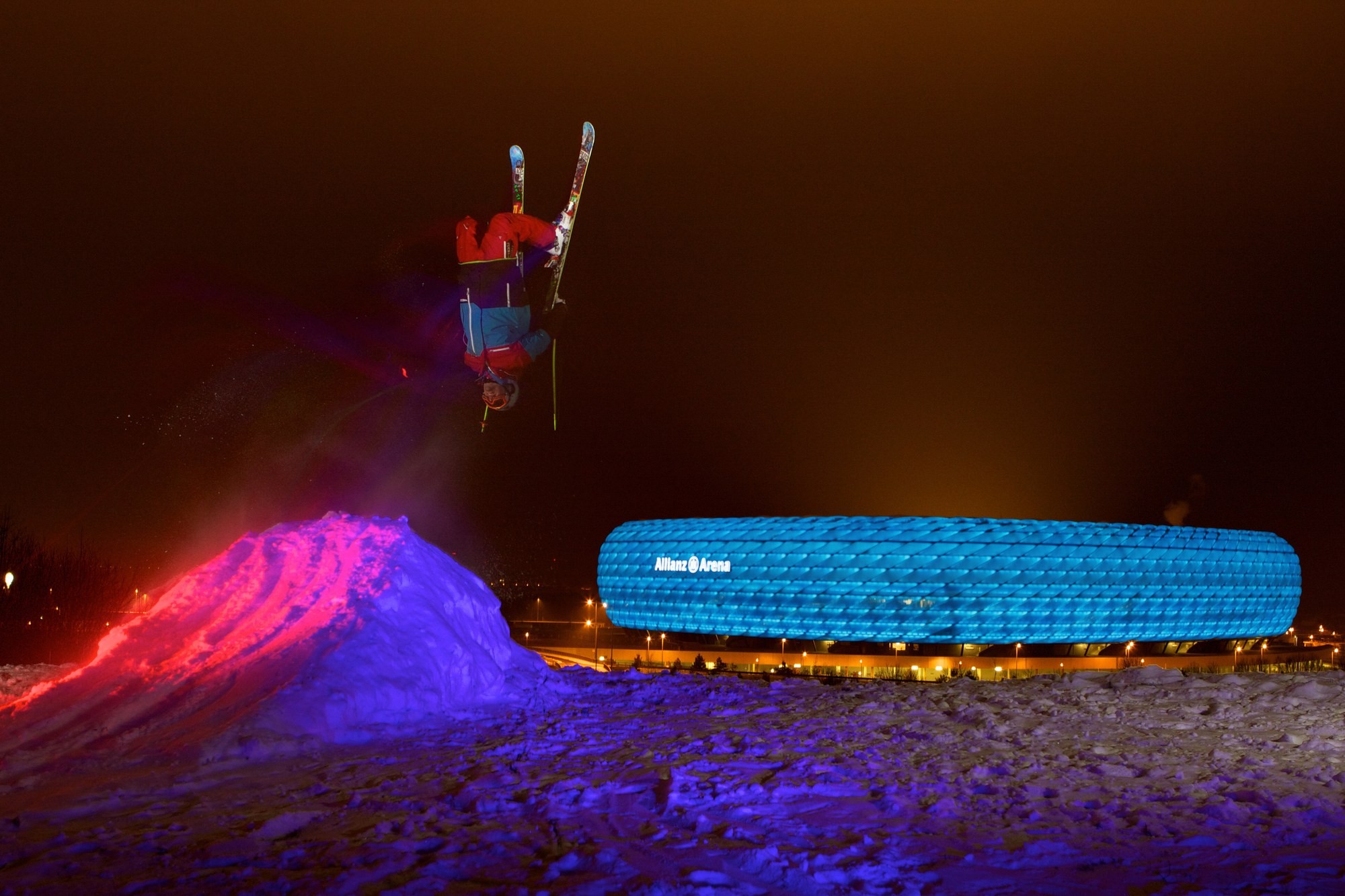
That changed dramatically because the team was well connected in the industry. It opened up a lot of opportunities for us — for example night shoots with the entire Nordica team. That is the real value of a team: not the equipment, but the access.
And then on my own: Picture and Rossignol
When the team dissolved for budget reasons, I was on my own again — but by then I had references, further content successes, video projects and more reach. At some point Instagram started too and changed once more what an athlete can actually deliver to a brand.

After that I found my own sponsors:
Picture Organic Clothing (apparel, France) — I was there from the beginning, having met them at ISPO in Munich.
Rossignol (skis) — I moved over to them and am still there today.
In parallel, the professional track kept running: a degree in industrial engineering, more and more modelling jobs, the big SportScheck winter campaigns together with Fuzzy and complete catalogues — plus Sport Bittl, Sport Sohn and Sport Schuster. How freeskiing and modelling carried each other is covered in Freeski and ski model.
Important: separating sport from career
Trips were financed — but I never had a monthly income from sponsorship. I did not compete internationally at the top professional level, and alongside my studies and the modelling and stunt projects that would not have been possible anyway.
And that was completely fine. I kept the two clearly separate — and I would recommend that to anyone who is not on the way to the absolute world elite. Doing a sport as a full profession is something entirely different. Anyone not doing that should not make their income depend on it either.
What you actually owe for equipment
Even if you only receive equipment and no money, you are obliged to genuinely support that equipment. This is the point young athletes underestimate most often: a material deal is not a discount, it is a contract with a service in return.
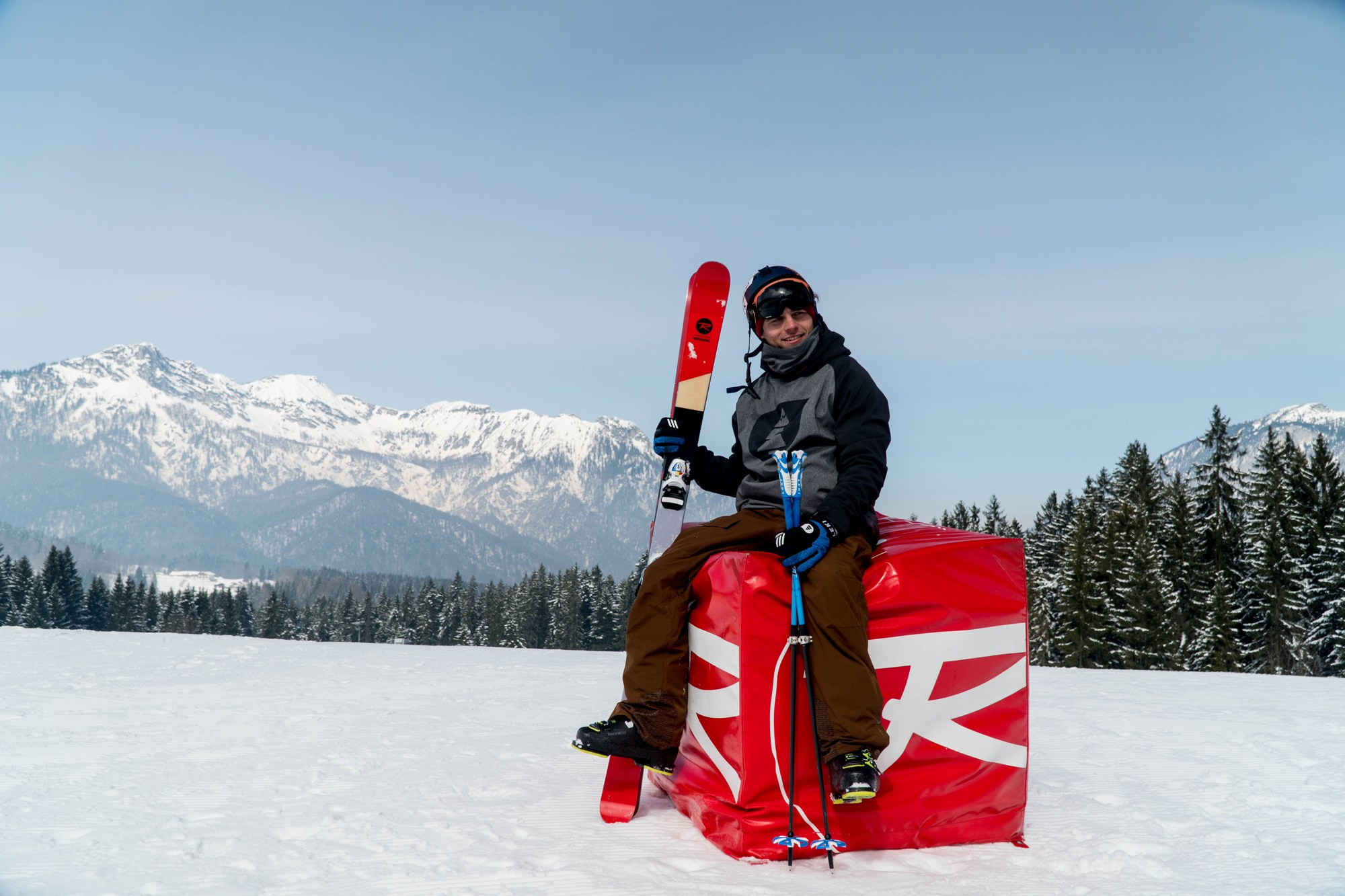
As a rule you also get prototypes to test, so the company gets fast internal feedback and is not caught out by the market. In my view that is part of the role of an opinion leader who is firmly embedded in a team. For the brand this is often the underrated part of the deal: honest feedback from someone who uses the product harder than any customer will.
Even so, a fair value has to emerge — between what you receive (the value of the equipment) and what you have to perform and deliver.
The decisive point today: social media posts have a value that exceeds the equipment value beyond a certain reach. That requires understanding on all sides — from the company, from the athlete, and from any agency negotiating on the company's behalf. Anyone receiving two pairs of skis worth 1,200 euros and delivering a season of content at a quality the brand would otherwise have to commission has, on the numbers, long since given more than they received.
As an individual athlete and freeskier I had no manager. And back then there was no AI to read a contract for you either — you acted to the best of your knowledge and gathered experience. Some of that experience I paid for dearly, which is exactly why it appears further down as a checklist.
What changed over time: as more and more press appeared about me, my results and my expeditions, and as other companies covered the cost of expeditions, the existing contract partners came under a certain pressure to act. You can see that clearly in our Norway project May the Wind Be With You: as soon as an athlete generates reach and projects on their own, the balance shifts.
Athlete contract and model contract — the direct comparison
I have signed both, and the two contract types get mixed up regularly — including by brands that have been in the business for a while. The most important difference is not the size of the fee, it is the duration of the commitment.
Criterion | Athlete contract | Model contract |
Term | usually a year or a season | usually a single shoot |
Usage | you are permanently the advertising asset | usage period clearly defined and limited |
Advertising purpose | brand awareness, permanent and diffuse | a targeted campaign with a defined buyout |
Extra compensation | as soon as the brand puts the material into an actual advertising campaign, that normally gets paid for separately | is the subject of the contract from the start |
What the brand buys | a credible voice inside a scene | a specific image for a specific purpose |
Anyone who wants to know exactly how the compensation logic works on the model side — day rate, usage period, territory, channels — will find it in Model buyout explained. An athlete contract is essentially a buyout without an end date, and that is precisely where its explosive potential lies.
Who owns the images?
This is the point where most athlete contracts are incomplete — and the point where disputes are most likely later.
The image rights initially always sit with the photographer or videographer. The model or athlete assigns their rights to their own likeness via a model release agreement or settles them contractually with the recipient. An athlete contract has to include that — otherwise an image ends up in a campaign that nobody unambiguously owns.
The point many people miss: if a photographer took the images and the athlete makes them available to the company, the photographer has to receive something too — either a fee or equipment. I have experienced both several times, and both are completely normal. What is not normal is an athlete passing on images they are not entitled to pass on.
For the company, an athlete contract is in return a lasting thing and delivers something for brand awareness — provided the chain of rights holds up.
The collision case: a sponsor logo on someone else's shoot
This is the hardest case you can have: an athlete has a ski sponsor and gets booked for a commercial shoot in which a different ski brand appears. In the end you have to express all of it in numbers — and then go into good communication.
The decisive question is: how prominent is it, really?
Am I advertising a competing brand with my face in the foreground, where the brand is the actual content?
Or is it a car commercial in which I have to ski on a different brand — but it is about neither the ski brand nor my face, only about the car?
In practice that is very clearly distinguishable and can also be agreed in advance. Then you find arrangements everyone is comfortable with. How logos, wraps and rebranding on the gear itself are handled is covered in Sports gear and the stylist. What that looks like on a real shooting day is in Die Discounter: who does the ski backflip?
Why I never gave away advertising exclusivity
Because my deals as a local team rider were comparatively small — I was never an international team rider — I in return never granted exclusivity for my commercial shoots. That was the most important strategic decision of my entire career, and it has paid off several times.
A concrete example: I had a good contractual and cooperative relationship with Picture for years — and still won the world trip with Chiemsee. Fortunately nothing stood in the way of that. It would also have been the logical outcome: Picture could hardly have paid me 70,000 euros for a trip around the world.
That was understandable for everyone involved. And as always: good, clear and above all written communication up front solves every problem proactively. Under no circumstances should you wait and simply do something — when things like that come out afterwards, it backfires.
What I would never sign again
1. Exclusivity that comes back to bite you — and generally anything that is disadvantageous for both sides. When there is serious money on the table and you cannot take it because you have an exclusivity agreement with another company, everyone loses: the athlete loses the job, the enquiring brand loses its casting, and the exclusive partner ends up with a frustrated athlete.
2. Working in advance of a signed agreement. That is my worst experience: receiving equipment without a clear contractual arrangement, producing images, handing them over — and then not getting paid, even though payment had been intended from the start. I deliberately do not name the company; this is about the mechanism, not about settling a score.
What happens in such cases — and here the note from the very top applies especially, this is my experience and not legal advice: it can quickly lead to legal disputes. As a rule the situation is clearly regulated. Companies lose very quickly here, can be issued with a formal warning, and then damages plus legal costs are on the table. That can never be in either side's interest — and fortunately it barely happens in practice, because everyone knows it. Hopefully this article helps a little with that.
The next stage after a formal warning — if no out-of-court settlement is reached — is court proceedings. For both sides that is always the most expensive and most stressful route. I know that from other areas of business too. Anyone who wants to avoid that point has to do nothing more than sign first.
Checklist: what belongs in an athlete or sponsorship contract
This is the list I wish I had had at 18. Two notes first. One: this is not legal advice, it is a way of structuring the conversation between brand and athlete. Two, and at least as important: the contract must not run to twenty pages. That would be completely over the top for the purpose. It has to be understandable and readable for both sides and still cover what matters.
Block | Point | What it is about |
Framework | 1. Term and definition of the season | When does the season start and end, automatic renewal, notice period. |
2. No advance performance without a signature | Accept no equipment and deliver no images before the contract is in place. | |
What the athlete delivers | 3. Concrete scope of services | Number of posts per season, which channels, competition entries, event and trade fair days, prototype feedback. |
4. Obligation to use the equipment | Where the equipment has to be visible — and what is explicitly excluded. | |
What the athlete receives | 5. Consideration quantified | Scope of equipment at list price, travel budget, any cash component, bonuses for results. |
6. Equivalence of value stated | Equipment value against the media value of the services owed — laid side by side openly. | |
Exclusivity | 7. Define it narrowly | Only the specific product category, for example skis — not “sporting goods” or “apparel”. Explicitly excluded: commercial and modelling jobs in other industries. |
8. Duty to notify instead of a ban | Written coordination in advance for third-party enquiries rather than a blanket block. | |
Images | 9. Copyright stays with the photographer | The athlete can only assign what they hold themselves. Settle the model release, and clarify the photographer's fee or equipment deal explicitly. |
10. Scope of the brand's usage | Channels, duration, territory. Otherwise it effectively means forever and everywhere. | |
11. Dividing line between athlete content and paid campaign | As soon as the brand puts the material into a paid advertising campaign, that is a separate matter with separate compensation. | |
End | 12. After-effect | May the images keep running after the contract ends, and for how long? Return or retention of the equipment. |
In my experience point 7 is the most important one. An exclusivity worded as “sporting goods” can block a skier from a running-shoe shoot that nobody had in mind when signing. And point 11 is the one that moves the most money: an athlete photo on the brand's Instagram channel is not the same thing as the same photo on a billboard.
For brands: what athlete partnerships really deliver
The single most important point applies to both sides: an athlete has to be clear about what they actually bring to the brand. Anyone who knows a post gets five likes and that there is no reach cannot expect to get everything for free, let alone a travel budget. It is always a cost-benefit question — and a question of what you are willing to put in yourself.
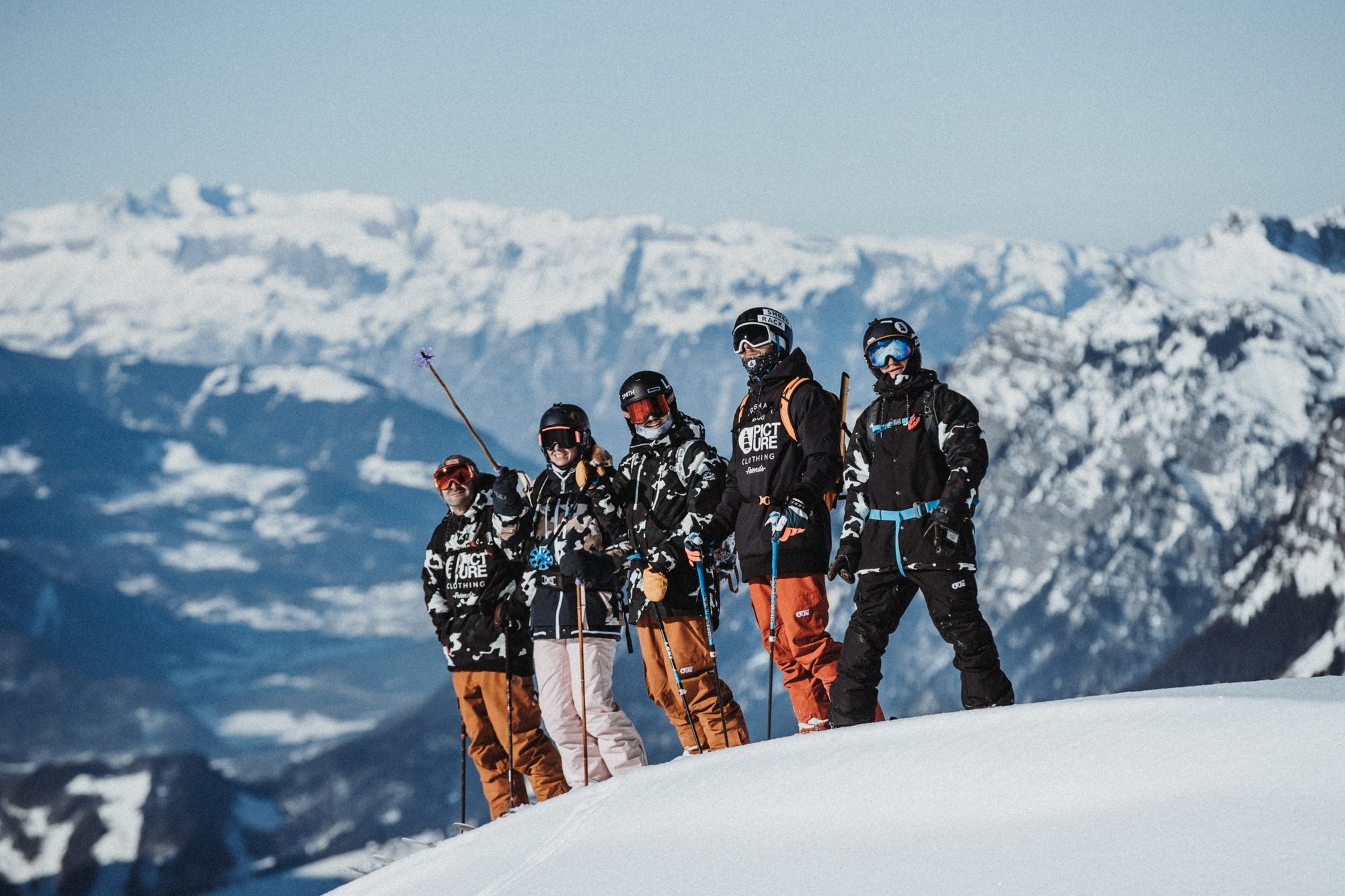
What a brand should clarify in advance:
Does the athlete have their own photographer or someone around them who can genuinely produce high-quality content? That decides the entire output — and it is the point where partnerships fail most often.
Ideally the brand provides a brand guide document so the athlete knows which direction to produce in.
But: the authenticity of the athlete must not be put at risk. The content has to be created in their style, always. A brand guide is a frame, not a storyboard.
The mistake I keep seeing
There is no point in a brand thinking it is running an advertising campaign and using its influencers and team riders as an extended advertising arm to essentially place an advert. There is still some wrong thinking at work there.
Instagram and social media are not advertising platforms. People are there to be entertained. They do not want to see adverts.
The content has to match that: made so that people enjoy watching it — then it also has the desired effect. As soon as it gets too promotional, the athlete's community does not respond; in the worst case it leaves them. And then the brand has destroyed exactly what it paid for.
A brand has to understand that and then provide the right tools. And that is not the promotional flyer that otherwise sits printed in the sports shop encouraging a purchase.
What I would tell a young athlete
This is a commitment topic. You cannot sign something, then float on cloud nine, feel like a king and lean back. After the signature the performance and the measurement begin — and that is hard work. You have to deliver.
And: in every industry, in every game, there is a network. People know each other, and you have a reputation. Anyone who behaves badly from the start finds it catching up with them very quickly. That applies to athletes and brands alike — the scene is smaller than it looks from the outside.
If you are a brand weighing up whether an athlete partnership or a classic booking is the right route: both have their place, and the differences are covered in Booking a model: agency or direct? And if the athlete's look becomes a permanent part of the brand, it is worth reading Beard, hair and body: what it costs when a production wants to change the look first — because what applies there to a single shooting day applies in an athlete contract to a whole season.
Are you planning an athlete or team rider programme and want to know how to set it up fairly — or do you need someone who knows both sides of it? Get in touch.
FAQ
How do you become a team rider for a sports brand?
Usually via a ladder, not via an application. In my case it was contests, my own videos, a photographer in my circle and roughly two years with a great many rejections, before the first material sponsors came in through a magazine team. What matters is visible material at a quality a brand can do something with — and someone who recommends you into the industry.
What is the difference between an athlete contract and a model contract?
A model contract usually covers a single shoot with a clearly limited usage period and a defined buyout. An athlete contract usually runs for a season or a year, and during that time you are permanently the brand's advertising asset. As soon as the brand puts athlete material into an actual paid advertising campaign, that is normally a separate matter with separate compensation.
What do you owe a sponsor if you only receive equipment?
You owe genuine support: the equipment has to be visibly used, and as a rule feedback on prototypes is part of it, so the company learns early on how a product lands. What matters is that a fair value emerges — beyond a certain reach, the media value of the posts owed clearly exceeds the value of the equipment.
Who owns the images from an athlete contract?
Copyright sits initially with the photographer or videographer. The athlete only assigns rights to their own likeness, usually via a model release. An athlete contract should therefore explicitly settle how the photographer is compensated — fee or equipment — and to what extent the brand may use the images. Without a statement on channels, duration and territory it effectively means forever and everywhere.
Should an athlete grant exclusivity?
Only narrowly defined, and only if the consideration matches. Exclusivity for a specific product category, such as skis, makes sense. Wordings like “sporting goods” or “apparel” block you from jobs nobody had in mind when signing. Commercial and modelling jobs in other industries belong explicitly excluded — a duty to notify in advance is usually a better solution than a blanket ban.
What does an athlete partnership really deliver for a brand?
A credible voice inside a scene and lasting brand awareness — plus honest product feedback from someone who uses the gear harder than any customer. What it does not deliver is a cheap advertising slot. If the content gets too promotional, the athlete's community does not respond. A brand guide as a frame helps; a prescribed storyboard destroys exactly what you paid for.
What can you do if a sponsor does not pay after you have delivered in advance?
Best of all, do not get into that position: accept no equipment and deliver no images before the contract is in place. If it does happen, legal steps are in practice usually clearly regulated and rarely end well for the company. That, however, is my experience and not legal advice — in a specific case it belongs with someone qualified to advise.
More posts