Fitness Model, Bodybuilder or Sports Model? Which Body Fits Which Campaign
Three terms, three completely different booking criteria. A comparison table of the three body types, the questions worth clarifying before booking, a copyable six-point briefing template that replaces athletic, 30 to 40 - and an honest list of what I am the wrong person for.
Written by
Tobi Deckert
Reading Time
12 minutes


Three categories, three completely different purposes
The problem starts with the word. Someone in marketing types “fitness model” into a briefing because no better word comes to mind — and gets back sedcards from bodybuilders, from Instagram fit girls and from sports models. Those are three completely different approaches with completely different booking criteria.
Bodybuilders. There are various weight classes, but fundamentally this is about a body aesthetic and an ideal governed by competition criteria: how a muscle is supposed to look, how it is built, how it is oiled. That usually sits far above an average body. It also includes the typical competition poses — which I simply cannot do.
Fitness models. Here the goal is really to market health and fitness themselves. The persona is the fit, healthy, conscious person — or the product is meant to look fit and healthy. Something that is almost never asked and should be: with a fitness model, clarify what their training goal actually is. Plenty of people in the gym train unevenly, with a clear bias towards the upper body. For a campaign that can become a bigger problem than it sounds.
Sports models. Here a sport is used to embody a lifestyle, to make a product attractive through the sport, to advertise the sport itself or the equipment around it — clothing, gear. That requires an authentic image. And with a sports model, the sport always shapes the body: it sets emphases, and those areas are loaded and therefore developed.
Side by side, the difference looks like this:
Criterion | Bodybuilder | Fitness model | Sports model |
Training goal | competition aesthetics, muscle volume, definition on a fixed date | making health and fitness visible; the look is the goal itself | performance in a sport; the body is the result, not the goal |
Physical appearance | far above average, competition poses, oiled look | trained and defined, frequently upper-body heavy | balanced and shaped by the sport, often less conspicuous than expected |
Fits | strength sports and supplement scene, max-load scenes, competition world | gym and health products, training equipment, wellness, nutrition | outdoor and sports brands, equipment, lifestyle, action in the field |
Where it goes wrong | reads as unreachable to the average consumer and puts the mass audience off | imbalances are immediately obvious to outdoor and fashion brands | cannot deliver maximum strength or competition-grade definition |
How a booker verifies it | competition history, posing material | ask about the training goal, look for balance | moving footage from the sport, competition results, a professional second opinion |
And where I sit — even when it costs me jobs
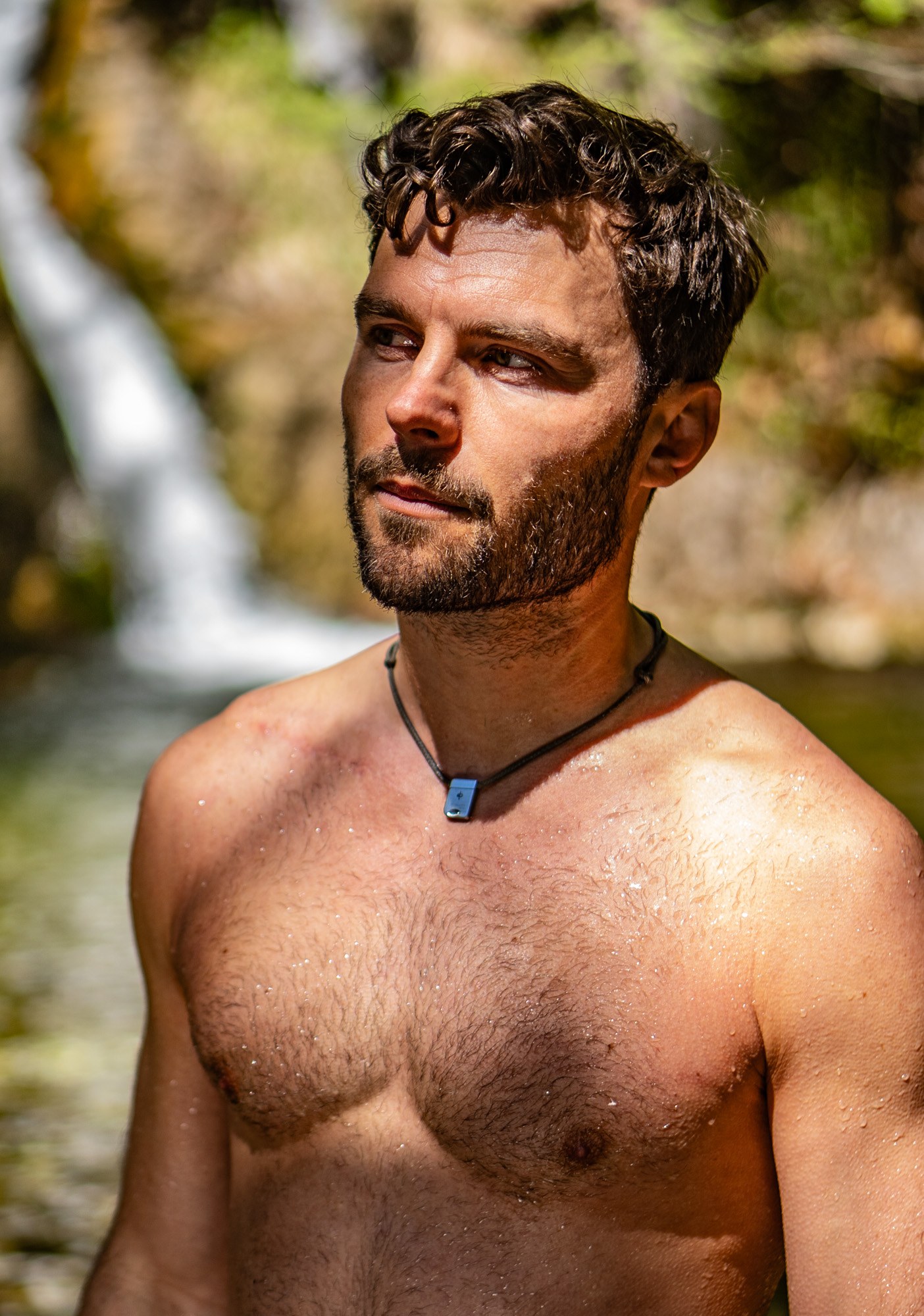
I am not a classic gym bulker. I keep my body healthy and fit so that I can perform the sport at the level I have to deliver on command in front of a camera. Even so, I have a solid base fitness and can handle any piece of equipment. How I do that in practice — morning routine, proprioceptive training, recovery — is in how I stay fit and healthy.
Fitness is a mass trend. “Fit is the new sexy”, and you can see it across advertising. At the same time there is a clear counter-movement: other bodies are deliberately booked to meet the audience where it is, or to show that not everyone has to look perfect. I think that is entirely fine.
And it has a concrete consequence for me: I have repeatedly not been booked because I am too muscular — even though I have a fit but average body. Even the musculature I need to stay agile was already too much for the persona in question. That is not a drama, it is good evidence that casting decisions are not a ranking list.

The three questions I ask back
When a client calls and says “we are looking for a fitness model”, I always ask the same three things back. In five minutes they clarify what would otherwise show up on the shooting day:
Which product exactly, what am I advertising? Then I can judge whether I can advertise it well. Usually that works out.
Does it matter how much weight I have to lift? Here I am immediately transparent: I do not train for load progression and maximum strength, I train for prevention, agility and function.
Who exactly is the target audience and what are their behaviour patterns? In the best case I share a similar pattern — and I say so. Or I can perform it in a way that puts me inside the audience’s frame.
Examples: where I fit and where I do not
Concrete cases make it clearest:
Protein powder for the bodybuilding scene → wrong. That is simply not me.
Protein powder for the average consumer who trains once or twice a week → fits.
A tradesman role → fits. A tradesman is generally not a bodybuilder: he works physically all day and does not head to the gym in the evening on top. He has a healthy base fitness from lots of movement and from working with tools and machines. Both a fitness model and a sports model can play that — the two are very similar anyway.
An outdoor sports or fashion brand → here a classic fitness model would be out of place. What is wanted is a balanced body, if not the sport-specific build itself.
What the body reveals about the sport
A trained eye sees it in a photo instantly — and a sports-savvy audience is a trained eye:
Road cyclists: horse thighs and little T-rex arms.
Swimmers: a very pronounced back — the German term is “swimmer’s cross”, because the latissimus is so developed.
Climbers and boulderers: you would expect a lot of arm and back muscle. In fact climbers tend to be wiry and still have unbelievable strength. Much of it is grip strength, which you cannot see.
Wave windsurfers: they generally ride without a harness and hold the rig by hand. I do not know a single windsurfer at a decent level without a six-pack — that much core and arm work demands it.
Gymnasts: in my view the most balanced of all. Many disciplines, many apparatus, every muscle group well developed.
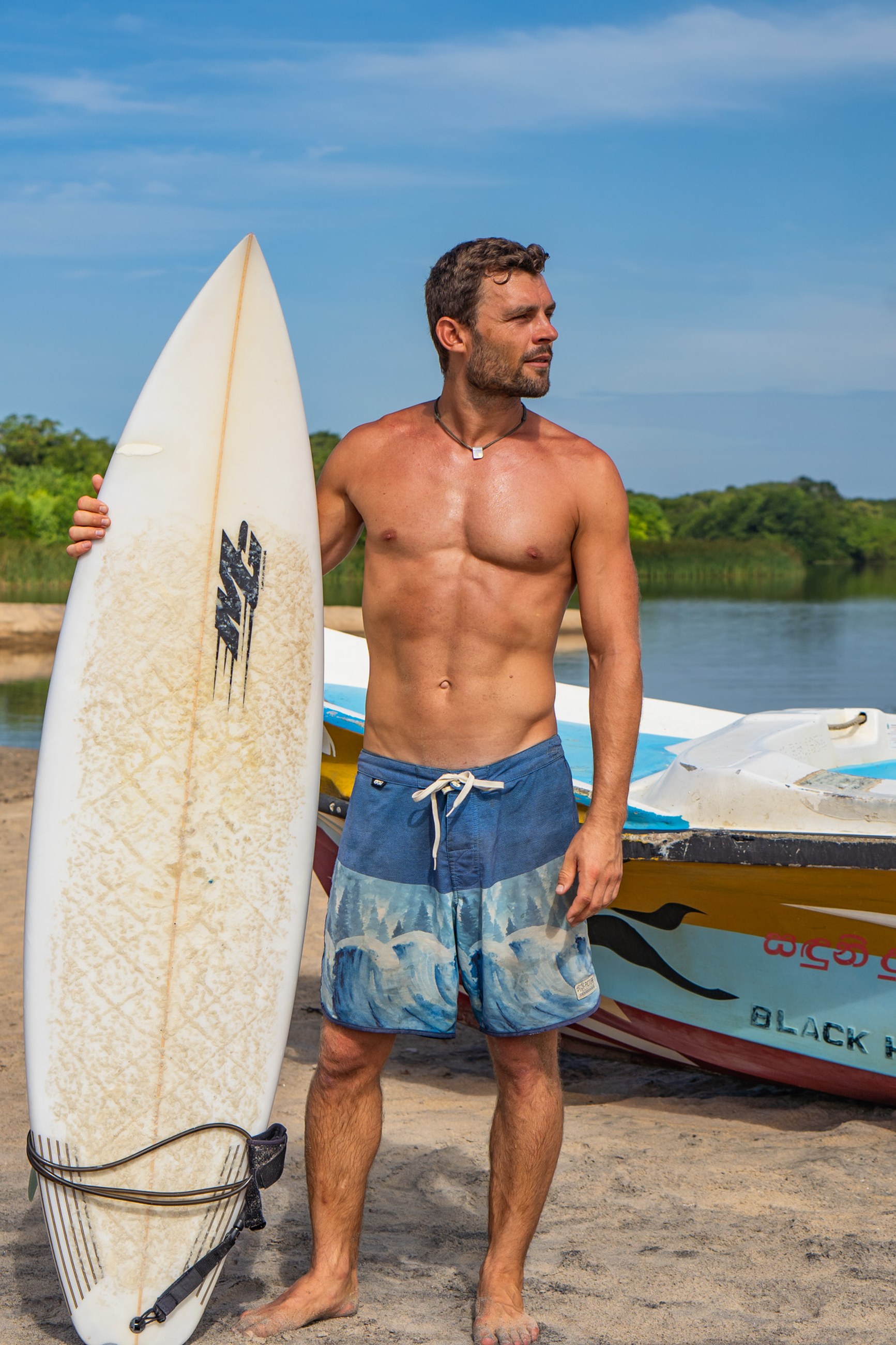
And me? I would describe myself as somewhere in between: a gymnast, but in the adrenaline and adventure sports world. Because I do so many different sports — and because I pay deliberate attention to it — my musculature is balanced. You would not be able to tell from my body which sport I do. Which ones those are in detail is in the overview of sports in front of the camera.
How hard a fitness shoot really is
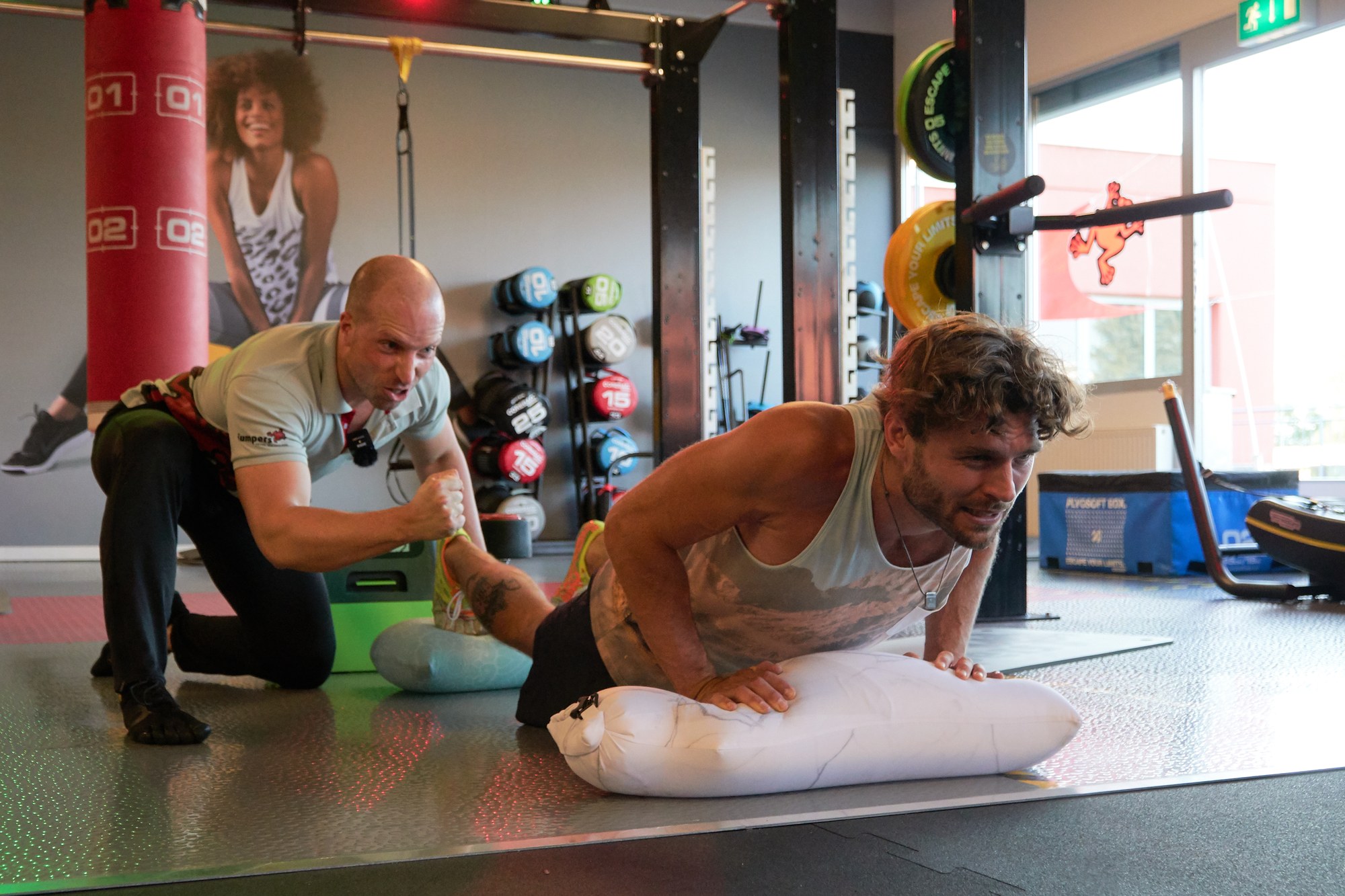
From the outside it looks like the easiest job in the world. The reality: it is very demanding.
Even though you only do a short exercise for any given photo or video, often only one repetition — in the end you shoot several angles and a lot of takes. When I shoot on one piece of training equipment all day, I sit at a normal intensity level with few repetitions, but spread across the entire day. That is a stimulus you never get in normal training — nobody spends a whole day in a gym doing brief bursts over and over.
Honestly: after every shoot like that I have serious muscle soreness the next day, because the muscle was exposed to a completely new stimulus. Which is exactly why the load profile of the shooting day belongs in the briefing — more on that below.
The real craft lies elsewhere. Most people do not enjoy exerting themselves and grinding away on a machine. So the skill of a fitness model is making the exercise look easy — with a relaxed facial expression. That is anything but simple, especially once you have been shooting for hours. How I hold that state across a shooting day and how I prepare for it is in preparing for a fitness or sports shoot.
The engineer’s point: axes of rotation have to line up
There is a technical core to why I can actually operate equipment rather than merely mime it: the joints, or axes of rotation, in the body have to match the axes on the machine. If they are offset, movements and levers arise that do not act where they should — and they can do damage.
A concrete example: a lower-back machine where you press backwards. Sit too low and fail to align your pelvis with the pivot point, and the pivot ends up in the lumbar region instead of the hip. Then you not only look bad while training — you genuinely harm yourself.
For a campaign that matters twice over. First, because no manufacturer wants images in which their machine is used incorrectly. Second, because the target audience notices exactly that. I am an engineer, and this thinking in axes and levers is the same reflex I use to build my own camera rigs.
How a client can verify before booking that someone can really do it
The easy case: usually the client knows their own product, perhaps uses it themselves and knows the persona precisely. If they even do the sport themselves, they can see instantly from a photo whether the model can do it or not.
The hard case: a production company with no experience in the sport — or, worse, one that has never shot on a mountain. Then it gets difficult not only in talent scouting but in execution too.
How you spot it, using freeski as the example: the sport lives on style, that is the alpha and omega. Style comes from the grab — taking hold of the ski in the air — and from tweaking: holding that grab and pressing it out so it looks maximally stylish at the moment the shutter fires. Someone who cannot do it looks, mid-air, like a person carrying skis.
What a client outside the sport should do — say an insurance company booking a sports model to make a dry subject feel alive:
Contact the model directly and ask. Were there competition results? Is there moving footage, and what does it look like? Why the direct line helps with exactly this is in booking a model: agency or direct.
Get a professional second opinion from someone who demonstrably commands the sport — and who is not a model themselves and does not want to become one.
This is a delicate point, and it decides whether the campaign works. The target audience is sensitive: it sees immediately whether the movement lands, whether the equipment is genuinely being operated — or whether it is only played for the photo. The same applies to the gear itself; what role the equipment plays in the frame is covered in sports gear and the stylist.
But it is not always necessary. An insurance company that wants to come across as looser and more modern and freshen up a dusty subject still wants to reach a broadly defined average person. And that average persona is not on the same sporting level — but as a mass audience it is reached, and the campaign works.
The teaching case: when audience and image do not match
A distribution partner of our inflatable yoga and fitness cushion got exactly this wrong in its purest form — even though I had warned them in advance. I am deliberately not naming the company; this is about the mechanism, not about blame.
They took a yoga model and had her perform fitness exercises on a pink bolster decorated with a lotus flower — a classic yoga motif.
It does not add up: a yogi does not want to do active fitness work. And a fitness customer does not buy a pink yoga cushion. The image addresses two audiences at once and therefore reaches neither. It had a measurable effect on sales figures — that was confirmed to me.
What I would have done instead: separate colours and exercises cleanly on the packaging front. A relaxation exercise or a yoga asana on the pink lotus motif, the fitness exercise on the dark motif. The same logic applies to every casting: persona, visual language and exercise have to come from the same world.
What belongs in the briefing instead of “athletic, 30 to 40”
“Athletic” is a decent word to start with — it implies not overweight, but not a bodybuilder either. It just needs sharpening. What does not help is going via body measurements, for instance specifying a bicep circumference.
These six points can be copied straight into a request:
Athletic plus frequency. Not “athletic”, but “trains regularly, at least twice a week”. Someone who is athletic but never does the sport does not have the same fitness.
A concrete ability instead of an adjective. “Must be able to perform exercise X on machine Y authentically” — suspension trainer, bench press, fascia roller, kettlebell.
Own practical experience. “Uses the device regularly, has it at home” — because the shoot produces genuine, authentic footage.
Name the audience and persona. “Should embody the average person who trains, not the bodybuilding scene.”
Body type as a corridor, not a measurement. “Athletic, evenly trained, no pronounced upper-body bias.”
Load profile of the shooting day. “The exercise is repeated in many takes across the day” — then the applicant knows stamina is required, not a still pose.
The effect: put that into the request and no occasional exerciser applies, but no bodybuilder either. The probability of a good match rises considerably — and the shooting day gets shorter.
An honest boundary: what I cover, where my limit is
So this article does not end as self-promotion, here is the part people normally leave out.
What I cover:
The average person who trains — once or twice a week, healthy, fit, no extreme. By far the largest audience there is.
Functional training, mobility, prevention, recovery — fascia, stretching, yoga- and Pilates-adjacent applications, proprioceptive training. Here I am not only a user but a developer: the inflatable training cushion I work with daily is my own product.
Operating equipment — I can handle any machine and demonstrate the exercise technically correctly, because I know what it hinges on.
Making the exercise look easy — a relaxed expression under genuine effort, across a whole shooting day.
Health and wellness personas — hotel, spa, prevention, “living fit and consciously”.
Where my limit is:
Maximum strength. A pure fitness model lifts considerably more than I do in individual exercises. If a protein powder campaign needs 120 kilos pressed on a bench with real plates, I am the wrong person — I would not manage it, and it is not my goal either.
Bodybuilder aesthetics. Competition definition, an oiled look, muscle volume far above average — not my body and not my goal. And I simply cannot do the poses that go with it.
The hardcore supplement scene. Wrong persona.
Looks to order. I do not train towards an ideal and I do not cut weight for a shoot. Anyone who needs guaranteed competition definition on a fixed date should book someone else.
What a sports model delivers in return is what a pure fitness model cannot: sport on command, indoors and out — on the mountain, on the water and in the snow, in wind, flat light and a window that allows exactly one take. Equipment competence — I can tell whether skis, wing, kite or bike suit the scene and where a mistake is being built into the frame that the community will spot instantly. Safety in the field, camera understanding, because I film and edit myself, credibility with a sports-savvy audience — and predictability: I give an assessment of preparation time, trial days and takes long before the shooting day, and so far I have never missed a shoot. When all of that in one person pays off and when booking separately is better is covered in sport double or stunt double.
One thing is possible after all, by the way: in acting it is common to train deliberately towards a role or a physique — Hugh Jackman adapted his entire build for Wolverine over months. I can offer that too, if a client wants it and is willing to pay for it, as long as it stays within reason. What such look changes cost in time and money will get an article of its own.
Casting a campaign right now and unsure which of the three body types suits your product? Send a booking request — and feel free to write straight into it what the model actually has to be able to do on the day.
FAQ
What is the difference between a fitness model and a bodybuilder?
A bodybuilder trains towards a competition aesthetic: muscle volume and definition against fixed criteria, plus the typical competition poses and an oiled look, usually far above an average body. A fitness model markets health and fitness themselves — trained, but within what the audience considers achievable. For most campaigns that is the decisive difference.
What separates a sports model from a fitness model?
With a fitness model the look is the goal itself. With a sports model the body is the result of a sport that is genuinely practised — the sport shapes it and sets emphases. In return a sports model delivers movement that looks authentic on camera, plus competence with the equipment. A pure fitness model generally delivers more maximum strength and more gym-built appearance.
Which body type fits my campaign?
That depends on the persona, not on an ideal. Strength sports and supplement scene: bodybuilder. Training equipment, health, wellness, nutrition for the general consumer: fitness model. Outdoor, sports and fashion brands, sports equipment, action in the field: sports model. For a broad mass audience, a balanced body that reads as achievable is almost always the better choice.
What should a briefing say instead of “athletic, 30 to 40”?
Six points: training frequency instead of an adjective, a concretely required exercise on a concrete machine, the model’s own practical experience with that machine, the named audience and persona, body type as a corridor rather than a measurement, and the load profile of the shooting day. Body measurements such as bicep circumference, by contrast, achieve nothing.
How do I verify before booking that someone can really do the sport?
Ask the model directly: competition results, moving footage, and what that footage looks like. And get a professional second opinion from someone who demonstrably commands the sport and is not a model themselves. A sports-savvy audience sees immediately whether a movement lands or is only played for the photo.
How demanding is a fitness shoot?
Considerably more demanding than it looks. Each take is only a short exercise, but several angles and many takes get shot across the whole day. That is a stimulus you never get in normal training — after shooting days like that I regularly have severe muscle soreness the next day. Which is why the load profile belongs in the briefing.
More posts