Beard, Hair and Body: What It Costs When a Production Wants to Change the Look
For a model, the look is the product. Why current polas decide the outcome, what a look clause in a contract actually does, how changes to beard, hair and colour can be priced fairly via opportunity costs, which look fits which industry, and where my limit is when it comes to the body.
Written by
Tobi Deckert
Reading Time
13 minutes


The look is the product, not the packaging
As a model, I am the product — as a person. The look is an inseparable part of that: beard length, hair length, cut, build. This is not vanity. It is simply the reason a production booked me and not someone else.
How strong that effect is shows in one observation from my own booking history: my face gets booked many times more often with a beard than without one. Same person, same skills, same availability — and a completely different market value.
From that follows a point many productions underestimate: if the look is the product, then every change to the look is an intervention in the product. And that belongs in the conversation before the shoot, not on the shooting day. This article describes how it works in practice — why polaroids are the most important tool, what a look clause in a contract actually does, how look changes can be priced fairly, and where my personal limit is.
One thing up front: this is not an accusation against anyone. Almost everything that goes wrong in this area is a communication problem, not bad faith. And communication problems can be solved with a single line in the enquiry — which is exactly what this article is about.
Why polaroids matter so much
Polas — short for polaroids — are bare, unedited shots: portrait, profile left, profile right, full body, hands. No lighting setup, no styling, no retouching. Their only purpose is to show what I actually look like shortly before the booking.

That is why I update my polas several times a month, depending on how many enquiries are running. They are supposed to be current to the day. And I generally shoot a lot of my own material on set, because I know how quickly images go out of date.
From the pola you can go in any direction — that is the actual point. The client sees the unstyled starting condition and therefore knows exactly what can be built on it: what will make-up do with it, what will styling do with it, how far is it to the persona they need? A finished, retouched set image answers none of those questions. A pola answers all of them. How polas fit into the preparation for a shooting day is covered in Preparing for a fitness or sports shoot.
The classic problem: when the polas never arrive
The most common failure in practice is mundane — and still expensive. It happens when only the finished set images reach the client, and not the current polas.
Set images look good. But they are often a few years old and show a different hair length, a different beard length, a different styling. If those images get forwarded and the polas do not travel with them, a sentence eventually turns up on set: “In the pictures the agency sent me this looked completely different.” And then it becomes a problem.
This is explicitly not an accusation against agencies. Anyone looking after many models has a lot of records to maintain, and set images are the material that looks best — it is entirely understandable that they go out first. They just do not answer the question the client actually has.
And it is hard to repair. Even if the stylist calls before the shoot to ask about clothing, or the make-up artist has specific requests, that first costs time and a lot of coordination. And second, agreements get made that were never signed. That must not happen — neither to my disadvantage nor to the production's. Why a direct line to the model shortens all of this is covered in Booking a model: agency or direct?
The look clause: one sentence that prevents a lot
When I get booked, I often sign a contract stating that I may not change beard or hair length. The period is clearly limited: from signing until the shooting day.
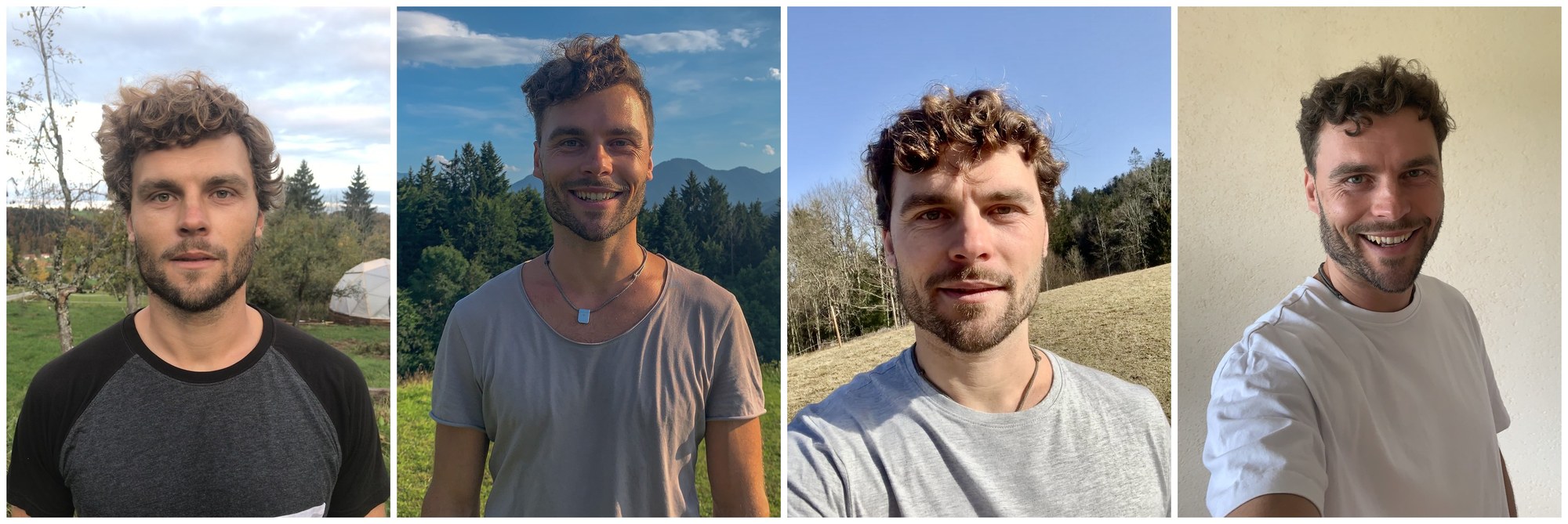
Why that is necessary is visible in the row of images above: four polas from four different years. Same person, four clearly different looks. Without a clause it is simply open which of them shows up in front of the camera.
In practice the clause is completely unproblematic as long as the shoot happens soon and no other, bigger job with an opposite look requirement falls into the same window. As a rule, that does not happen.
And if it does happen? Then I say clearly that it will not work. I have to stand by what I sign. I cannot promise a full beard to one production and promise to shave it off for the next. That does not work — and anyone who tries loses both jobs and their reputation along with them.
Why the option system exists for exactly this
The look clause is directly connected to another mechanism in the industry: options. Many productions ask for a first option and expect it to be held. For me — and for every model I know — what counts in the end is the booking. An option is a reservation, not a confirmation.
As soon as several options are in play, communication has to be sharp, including about shortlists. Everything moves very fast today, and productions often decide late or not at all. That is exhausting for the agency, for the model and for everyone involved.
It is still understandable. Especially when several people are being filmed, a group gets cast that has to work together — a group of friends, for example. And at the same time every single person is supposed to match their own persona. That is a real task in marketing, and it is why it takes time.
Here too the polas are the decisive tool: they are the only thing you can compare to see whether a group visually fits together. What role the persona plays in that selection is covered in Fitness model, bodybuilder or sports model.
What a look change costs: the opportunity-cost principle
The question “what does it cost if we take the beard off?” has no price list. But it has a very clear logic, and that logic can be applied to any individual case.
Extreme example: a shaved head. If I had to shave my head for a shoot and it takes three months for the hair to grow back, then in reverse it means: for three months I do not get any other job that books my normal look. Those are opportunity costs — I am taking away my own chance at other shoots. What I would have earned on average during that time is what I would have to invoice.
That would definitely be more expensive than booking a more suitable model who already has a shaved head. And that is the honest answer: there are look changes where casting a different model is the better solution for everyone involved. Which is why in practice you almost always agree on a middle ground.
With a beard, which grows back in a few days, this stays within an affordable range — but it has to be agreed separately. The difference between “costs almost nothing” and “costs a multiple” is not the razor. It is the regrowth time.
Change | How long it lasts | How it is usually handled |
Colour that washes out again | days | straightforward, usually covered by the fee — but still worth raising beforehand |
Trimming, shaping or removing the beard | days to a few weeks | affordable range, but as a separate agreement with its own fee |
A significant change in hair length | weeks to months | calculate via opportunity costs, settle before the booking |
Shaved head | roughly three months | usually not economical — a more suitable model is the better choice here |
For context: these are values from my own practice, not industry rates. Every case depends on the specific time window and on what else is scheduled during it.
What I have done myself
In my case it has always been short-term and reversible: colouring my hair with a colour that washes out again, so with no medium or long-term consequences. Same with the beard: trimming, shaping, adjusting. As a rule that can be handled without any drama, as long as it is on the table beforehand.
That is why I bring shaving kit to every set, so I can adjust the beard myself. That is not a special favour I invoice for, it is part of normal preparation — just like the gear and clothing I bring.
What does bother me: being presented with a fait accompli
The case that really causes trouble is a different one. If I am told on set, in the middle of the shoot, that I have to shave the beard off, then I want to talk about it again. Not out of stubbornness, but because three things happen at once: the schedule stalls, pressure builds, and a decision gets made under pressure that has effects well beyond the shooting day.
If that is a planning error on the client side, then it costs money — and it should not be to my disadvantage. It has not come to that with me so far. But I know such cases from people around me, and they get argued about.
What matters to me is that there is understanding on both sides: the production has an image in mind that it needs, and that is legitimate. And the model has a market value that hangs on the look, which is just as legitimate. You only have to talk about it early enough.
The body: where I go along and where I do not
With the body it gets more fundamental than with the beard, because nothing here can be reversed in a few days.
Losing weight for a shoot: no. That goes against my principles — and against the basis of my work. I need the muscle for the sport I have to deliver on cue in front of the camera.
Too muscular for a job: then I decline clearly. I have been turned down because my build is too athletic. And I will not negotiate on fees about that either — it is not economical for either side.
Bulking up deliberately: on a small scale yes, beyond that no. It is work and it costs time, and at the scale it would take it would not be good for me. I am very happy with my body and I do the best I can so that I am able to do everything I do. Any strong deviation in one direction would get in the way of that.
Why I deliberately do not train in one single direction is covered in detail in How I stay fit and healthy. Which body type is right for which campaign is covered in Fitness model, bodybuilder or sports model.
And what about the Wolverine case?
In acting, training towards a role is standard practice. Hugh Jackman adapted his entire build for Wolverine and worked towards it for months. The question therefore comes up regularly — and the answer is uncomfortable but simple:
It is not comparable. A Hollywood actor performs at a scale where months of training for a role is economically viable. In a commercial production that scale is not available — and that is completely fine. It just means the solution has to be a different one.
Specifically, in my case:
A six-pack I can deliver, because I usually have one — out of conviction and because I do a lot of different sports.
On a small scale a change is an investment in myself that I do not invoice for.
Beyond a certain point I have to be paid for it — and that should be understandable. Otherwise there are other models who fit better, and for the shoot it simply would not be worth it.
And if a six-pack explicitly must not be there, booking me makes no sense anyway — although that case does not really come up in practice.
Body hair, grooming — and who pays for it
This is vaguer than beard and hair, because ideals differ widely. Which is why the most important thing is the same as everywhere else: raise it beforehand. I usually ask about it proactively rather than hoping it will be fine.
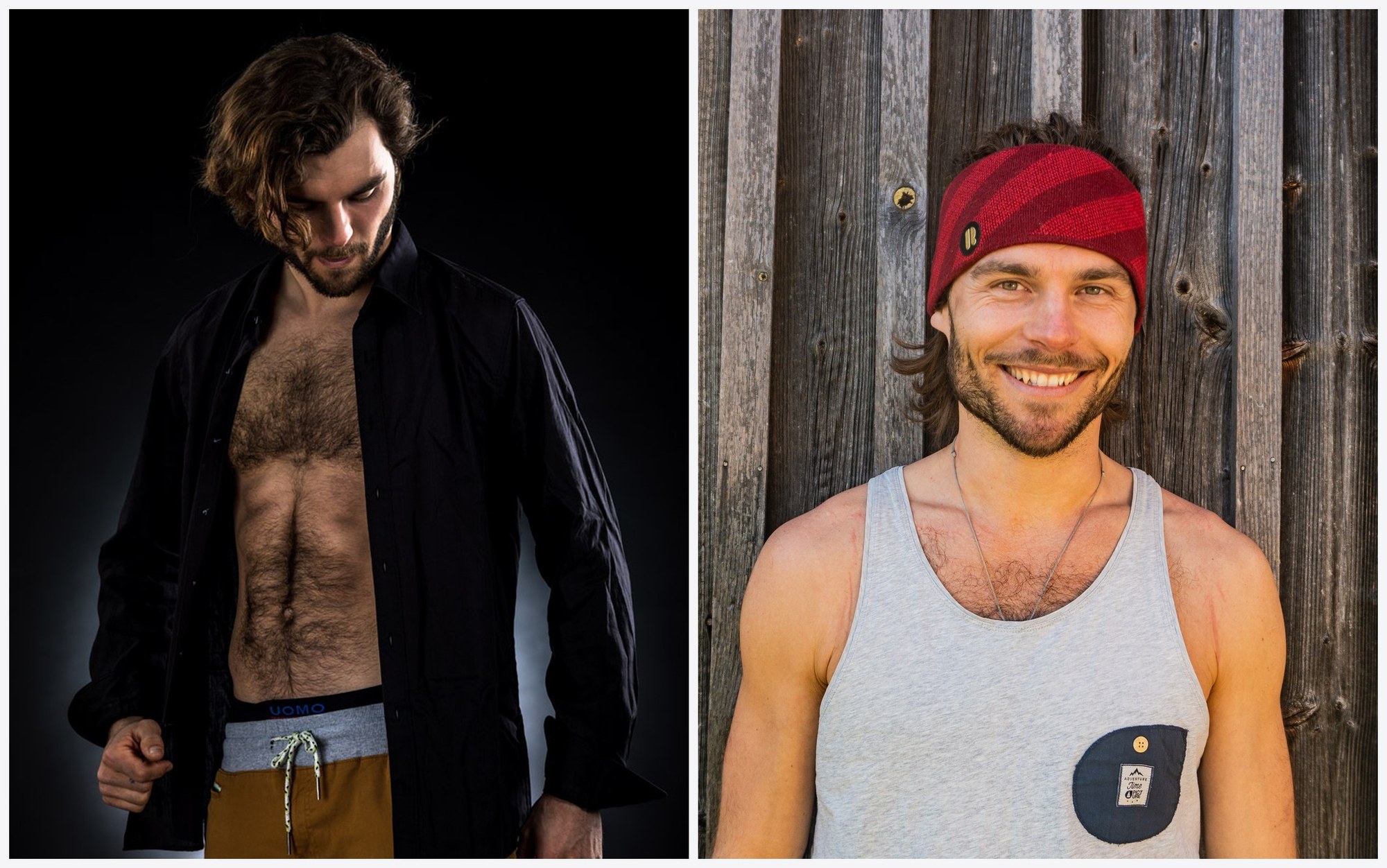
For hotel or spa shoots it is a topic that needs settling — there is a lot of skin in the frame.
For models advertising make-up or razors, removing body hair should go without saying. It is part of the concept, not a special request.
Who does it, and who pays? If it is settled in advance, I turn up on set fully prepared. If it was not clear beforehand, the production has to create the framework for it and schedule it — which as a rule works reliably. And then it is usually covered by the fee, which in those cases also tends to be somewhat above average.
Which look fits which client
There is no good look and no bad look. There are only fitting and unfitting ones. Sorted roughly by industry it looks like this:
Industry | Fitting look |
Outdoor and sport | rougher and more natural — authenticity matters more than tidiness; here they often want considerably more than a three-day stubble |
Industry and trades | has to fit and be reasonably tidy — not necessarily clean-shaven, but a sensible middle ground |
Hotel and wellness | groomed and fresh |
Business and finance | usually the short cut, straight from the barber |
Fashion | a cut and style entirely of its own — here the signature of the campaign decides |
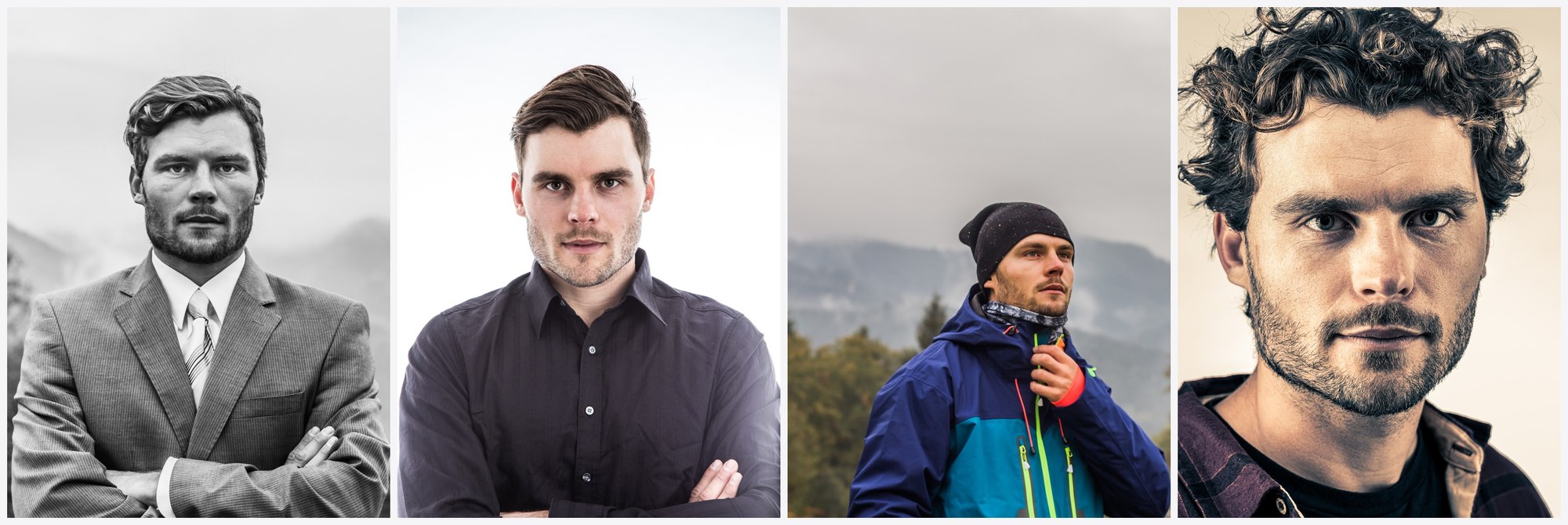
It works in the other direction too: turning up on set after months of not seeing a barber is just as unhelpful. Natural does not mean neglected. For outdoor clients the goal is a deliberately chosen, grown look — not an accident.
The same principle applies not only to the face but to everything that ends up in the frame. Why sports equipment follows exactly the same logic is covered in Sports gear and the stylist.
What belongs in the enquiry or the contract
As a rule, one sentence is enough: that the look must not change before the shooting day. Because that very look can be the reason the production booked you.
If you want to do it properly, settle these five points in the enquiry. They cost five minutes and save hours on the day:
Ask for current polas, not just the sedcard. One line does it: “Please send polas no older than four weeks.”
Freeze the look. “Beard and hair length remain unchanged from signing until the shooting day.” That is the actual look clause.
Name the changes you want concretely — trimming the beard, colouring the hair, body hair — including who carries them out and who pays for them.
Treat changes with an after-effect separately. Anything lasting longer than a few days is its own agreement with its own fee. Otherwise it gets negotiated on the shooting day, which is the worst possible moment for it.
Name the option and the time window clearly. The longer the gap between option and shoot, the more important the clause becomes — and the more it is worth defining what happens if the date moves.
How all of this relates to day rate, buyout and usage rights is covered in Model buyout explained.
What productions underestimate most often
In the end it comes down to one point: all of this belongs in a clean conversation beforehand. The recurring mistake is presenting the model with a fait accompli — shortly before the shoot or on set itself. It costs time, money and trust. And it can be avoided with a single line in the enquiry.
The same mechanism turns up once more, only across a whole season instead of a single shooting day: when a brand puts an athlete under contract, that athlete's appearance becomes a permanent part of the deal. How that works and where it differs from a model contract is covered in Athlete contracts: sponsorship, team riders and how they differ from a model contract.
Are you casting a campaign right now and the look matters? Just write straight into the enquiry which look you need and what should be different on the shooting day from what the images show. Send a booking enquiry — I will tell you openly what works, what needs a separate agreement, and when a different model is the better choice.
FAQ
Can a client require a model to shave off their beard?
They can require it if it is contractually agreed — and that is exactly the point. A look change is a service of its own with its own fee, and it belongs in the conversation before the booking, not on the shooting day. For a beard that grows back within days this is usually straightforward and affordable. The longer the change lasts, the more expensive it gets.
What does it cost when a model changes their look for a shoot?
There is no rate, but there is a clear logic: opportunity costs. What matters is how long the model is unavailable or only partly bookable afterwards. For a wash-out hair colour that is days; for a shaved head it is around three months. The jobs lost during that period are the benchmark for the surcharge.
What are polas and why do productions ask for them?
Polas are bare, unedited shots — portrait, profile left and right, full body, hands — with no lighting setup, styling or retouching. They show the current state shortly before the booking. Set images, by contrast, show a finished result that is often years old. Anyone who only receives set images does not know what the model actually looks like on the day.
How often should polas be updated?
I update mine several times a month, depending on the number of enquiries. As a rule of thumb for clients: do not use polas older than four weeks as a basis for a decision — especially not with bearded men, where something visibly changes within a few weeks.
What is a look clause in a model contract?
A sentence stating that beard and hair length stay unchanged between signing and the shooting day. It protects both sides: the production gets the face it booked, and the model knows what to stick to. It is also why a model cannot make opposing look commitments to two productions at once.
Does a sports model train towards a specific body for a role?
On a small scale yes, as an investment in myself. Losing weight for a shoot is something I do not do — I need the muscle for the sport. And if a campaign needs a clearly different body, a more suitable model is the more economical solution for everyone. The comparison with Hollywood roles does not hold here: that is a completely different scale.
More posts